$79.00 Original price was: $79.00.$65.00Current price is: $65.00.
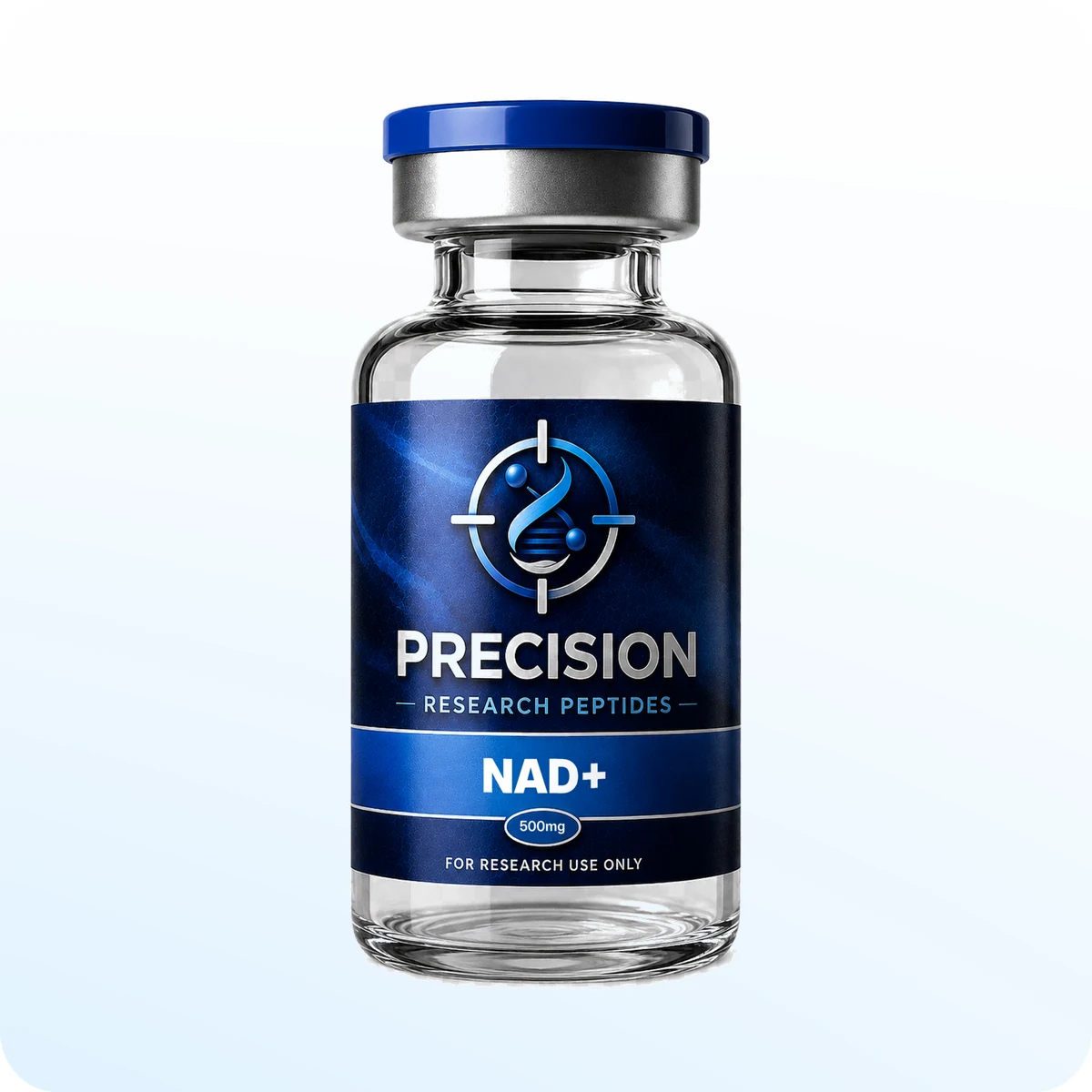
Research-grade NAD+ supplied for cellular metabolism, redox signaling, and oxidative pathway studies.
In stock
All major credit cards accepted

Nicotinamide adenine dinucleotide (NAD+) is a pyridine dinucleotide coenzyme present in all living cells, composed of two nucleotides joined through their phosphate groups — one bearing an adenine base, the other a nicotinamide base. In its oxidized form (NAD+) it functions as a central redox cofactor and as a substrate consumed by NAD+-dependent enzymes such as the sirtuins and poly(ADP-ribose) polymerases. NAD+ is a coenzyme, not a peptide. Supplied as a lyophilized research chemical for in vitro and preclinical laboratory use, this material is intended for qualified investigators studying NAD+/sirtuin pathway research, redox biology, and cellular metabolism research. Each lot is characterized for identity and purity and provided strictly as a reference compound for controlled laboratory settings.
Not for human or animal use. Research laboratory use only.
All compounds referenced are supplied for laboratory and research applications only and are not for human consumption.
NAD+ is a coenzyme central to cellular redox chemistry, cycling between its oxidized (NAD+) and reduced (NADH) forms as it participates in electron-transfer reactions.1 Beyond this redox role, NAD+ serves as a consumed substrate for NAD+-dependent enzymes, and research has examined its role in the activity of the sirtuins and poly(ADP-ribose) polymerases within NAD+/sirtuin pathway research.1,2 Reviews of NAD+ biology have investigated its role in metabolic homeostasis research and in cellular redox and energy-metabolism processes in model systems, framing intracellular NAD+ availability as a variable of interest in mitochondrial signaling research.2,3 The in vivo preclinical literature on NAD+-precursor molecules has been summarized, describing how tissue NAD+ pools and downstream enzymatic pathways are studied in research settings.3 More recent work has characterized NAD+ homeostasis — its biosynthesis, salvage, and consumption — as a subject of ongoing metabolic research across health and disease model systems.4 Together, these sources position NAD+ as a foundational cofactor studied across redox biology, sirtuin signaling, and metabolic-homeostasis research. All statements summarize published laboratory findings and are provided for scientific reference only, with no representation of safety or effect in humans or animals.
Not for human or animal use. Research laboratory use only.
A professional platform for accessing research compounds with clarity, consistency, and research-first standards.
From sourcing to fulfillment, every step of our process is structured around clarity, consistency, and professional research standards.
Our platform is built to support efficient research workflows with organized categories, standardized product presentation, and simple reordering.
Every product is presented in formats designed for stability, professional handling, and alignment with laboratory environments.

Our approach prioritizes clarity, structure, and transparency. Each compound is presented with research-focused documentation, neutral communication, and consistent labeling to support scientific workflows.
We believe long-term trust is built through precision, not promotion.