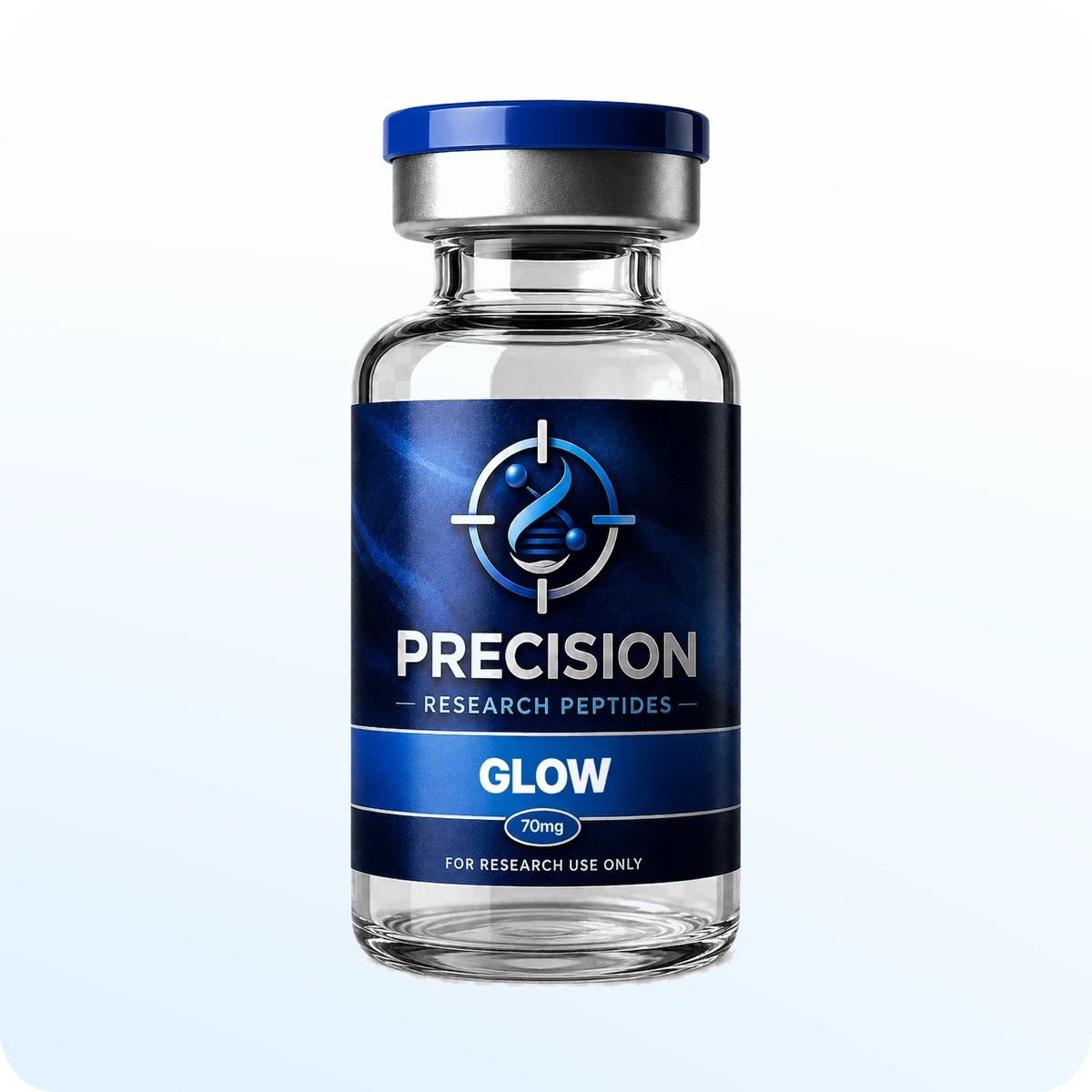
$119.00 Original price was: $119.00.$70.00Current price is: $70.00.
Three-peptide research blend (GHK-Cu, BPC-157, TB-500) supplied for matrix-signaling and actin-dynamics research models.
All major credit cards accepted

GLOW is a research-use-only blend supplied as a single laboratory preparation that combines three independently characterized peptides: GHK-Cu (copper tripeptide-1), BPC-157 (a stable pentadecapeptide sequence), and TB-500 (a synthetic fragment corresponding to a bioactive region of thymosin beta-4). Each constituent is a distinct compound with its own body of preclinical literature. GHK-Cu has been investigated for its role in copper coordination and extracellular matrix remodeling; BPC-157 has been examined in gastrointestinal and connective-tissue models; and the thymosin beta-4 fragment is studied in research on actin regulation and cell-migration pathways. This material is intended solely for in vitro and laboratory investigation. Not for human or animal use. Research laboratory use only.
What’s in each 70mg vial
Specifications: lyophilized powder blend · purity ≥99% (HPLC verified) · lot GL70-2606-2706, with its certificate of analysis on our Lab Results page · store at −20 °C, protected from light and moisture · stability 24+ months lyophilized.
What’s in GLOW?
Each 70mg vial contains GHK-Cu 50mg, BPC-157 10mg and TB-500 10mg as a single lyophilized blend. The lot number on the vial matches the certificate of analysis on our Lab Results page.
How is GLOW different from KLOW?
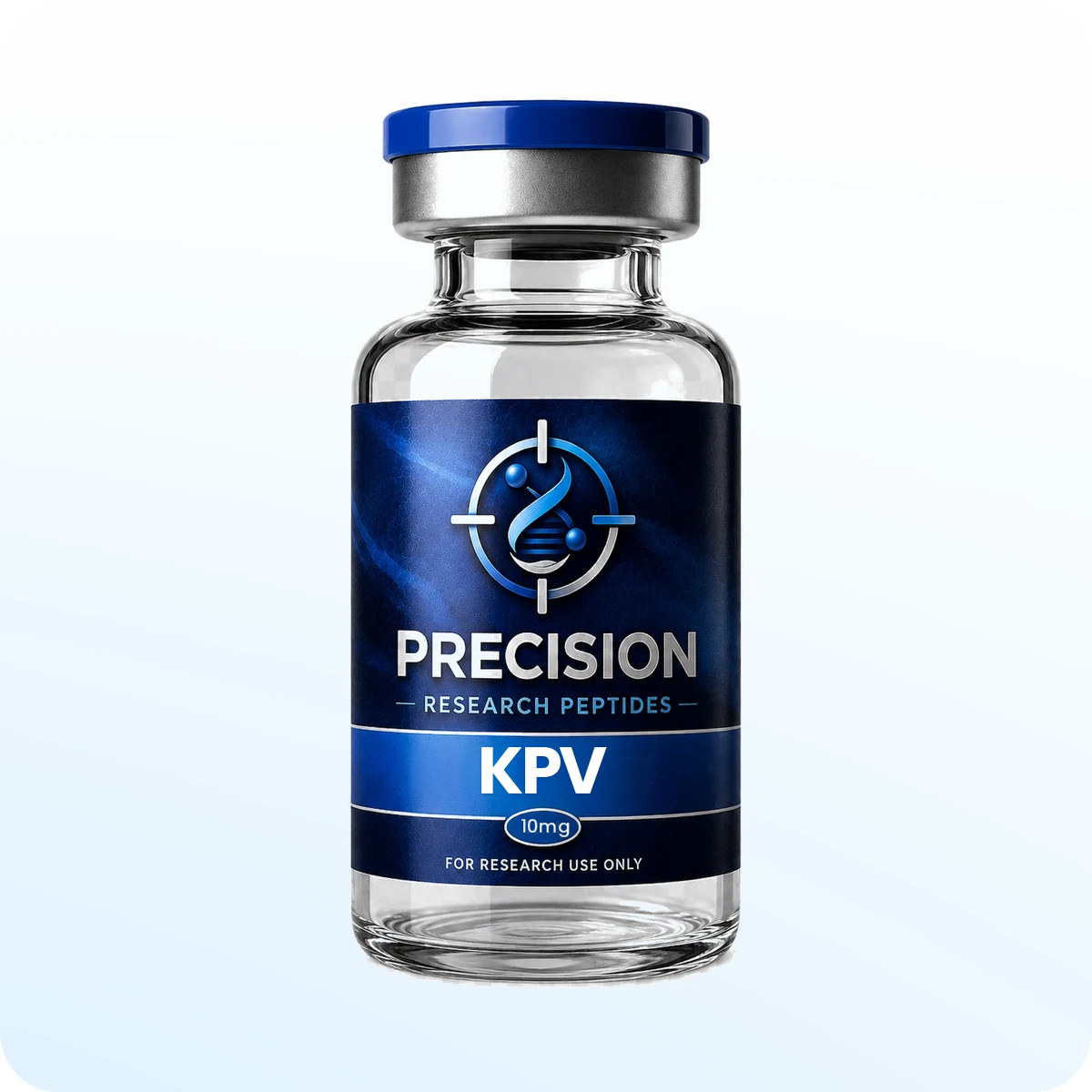
KLOW contains the same three peptides plus 10mg of KPV, the C-terminal tripeptide of α-MSH, for an 80mg total. GLOW is the three-peptide version at 70mg. See the KLOW four-peptide blend.
How is each lot tested?
Every lot is tested by an independent third-party laboratory for identity (mass spectrometry) and purity (HPLC, ≥99%). The certificate of analysis for the current lot is published on our Lab Results page.
How should GLOW be stored?
Keep the lyophilized vial at −20 °C, protected from light and moisture, and limit freeze-thaw cycles. Stored this way, lyophilized material is stable for 24+ months.
When does my order ship?
In-stock orders placed by 4:30 PM CT, Monday to Friday, ship the same business day. Standard shipping is free on orders over $149, and we ship within the United States only.
All compounds referenced are supplied for laboratory and research applications only and are not for human consumption.
GHK-Cu (glycyl-L-histidyl-L-lysine coordinated to copper(II)) is a naturally occurring tripeptide-copper complex. Research has examined its capacity to bind copper ions and its association with genes involved in extracellular matrix organization, including modulation of collagen and metalloproteinase expression in fibroblast models.1 Additional work has investigated its role in matrix remodeling and its interaction with signaling pathways relevant to connective-tissue biology.2
BPC-157, a stable pentadecapeptide derived from a sequence identified in gastric juice, has been investigated for its role in angiogenic and cytoprotective pathways within preclinical gastrointestinal and musculoskeletal systems. Reported research has examined its relationship to nitric oxide signaling, growth-factor receptor expression, and vascular network formation in experimental models.3
TB-500 corresponds to a synthetic fragment of thymosin beta-4, an actin-sequestering peptide. Research has examined thymosin beta-4 for its role in actin dynamics, cell migration, and matrix interactions across a range of animal models, including its association with cellular motility and matrix interactions.4
The three constituents are described here individually; no combined or synergistic activity is implied. Each is characterized separately in the referenced literature and is provided for laboratory investigation only.
Not for human or animal use. Research laboratory use only.
KLOW
A professional platform for accessing research compounds with clarity, consistency, and research-first standards.
From sourcing to fulfillment, every step of our process is structured around clarity, consistency, and professional research standards.
Our platform is built to support efficient research workflows with organized categories, standardized product presentation, and simple reordering.
Every product is presented in formats designed for stability, professional handling, and alignment with laboratory environments.

Our approach prioritizes clarity, structure, and transparency. Each compound is presented with research-focused documentation, neutral communication, and consistent labeling to support scientific workflows.
We believe long-term trust is built through precision, not promotion.