$79.00 Original price was: $79.00.$67.15Current price is: $67.15.
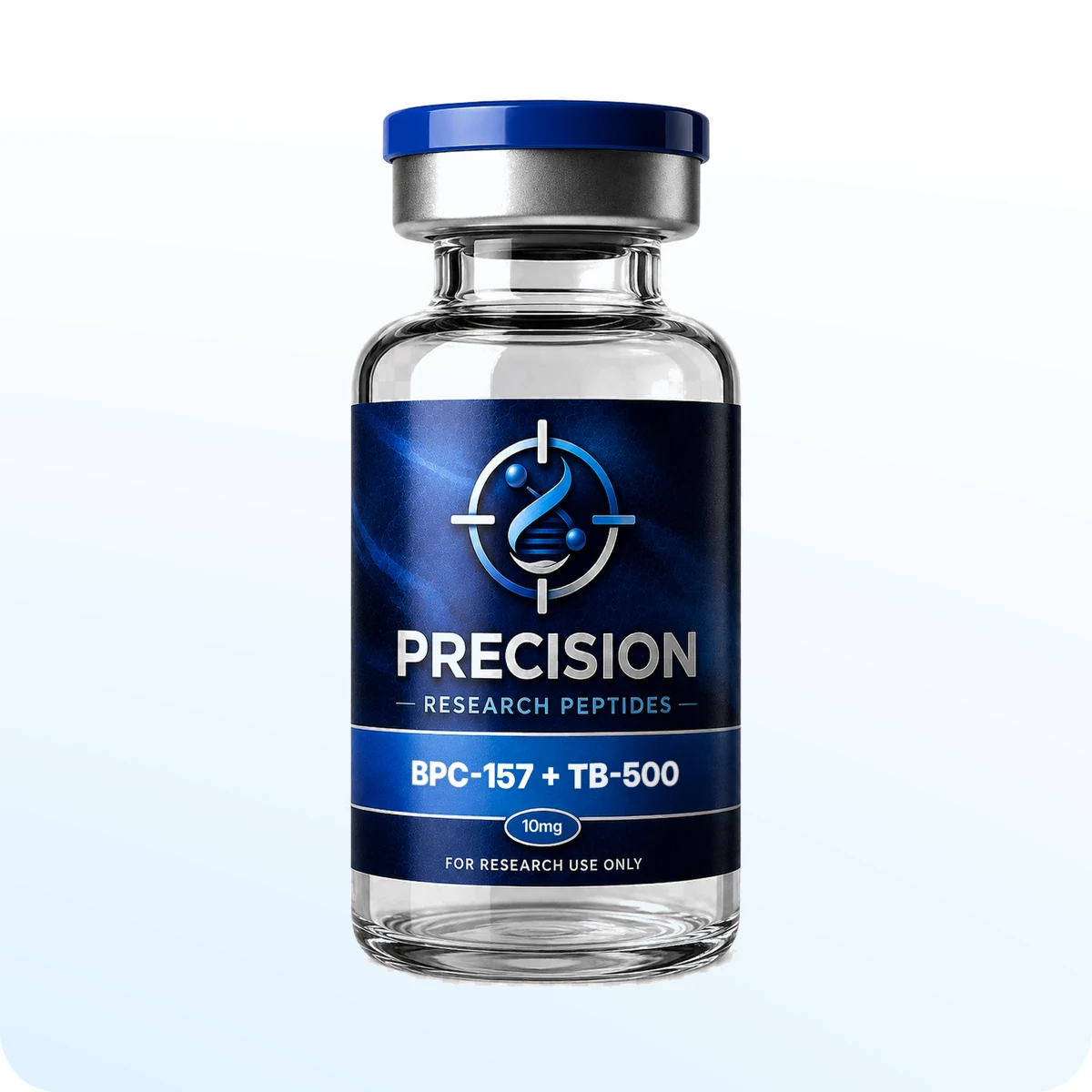
Two-peptide research blend (BPC-157 + TB-500) supplied for angiogenic-signaling, actin-dynamics and cell-migration research models.
In stock
All major credit cards accepted

BPC-157 + TB-500 Blend is a research reference preparation that combines two extensively studied peptides: BPC-157, a stable synthetic pentadecapeptide derived from a gastric protein sequence, and TB-500, a synthetic form of the actin-sequestering protein Thymosin Beta-4. The blend pairs two compounds that have each been independently studied in research on angiogenic signaling, cell migration, and connective-tissue and matrix remodeling in preclinical systems. It is supplied as a combined reference material to facilitate comparative and combinatorial laboratory investigation of these two peptide chemistries. Precision Research Peptides provides this blend solely as a research reference material; no combined human or animal data is implied or supported.
Not for human or animal use. Research laboratory use only.
All compounds referenced are supplied for laboratory and research applications only and are not for human consumption.
This preparation combines BPC-157 and TB-500 (synthetic Thymosin Beta-4), each of which has been independently investigated in preclinical research on overlapping mechanistic themes; no data on the combination itself is asserted here.
BPC-157, a pentadecapeptide derived from a gastric cytoprotective protein, has been studied in research on angiogenic signaling — including reported vascular endothelial growth factor receptor 2 (VEGFR2) activation and up-regulation in endothelial systems1 — and on the Src–caveolin-1–eNOS nitric-oxide pathway.2 It has additionally been examined for its role in tendon-fibroblast outgrowth and migration relevant to matrix remodeling.3
TB-500, the research form of Thymosin Beta-4, is characterized primarily by actin sequestration, and reviews describe it as a actin-regulating peptide studied in cell-migration models.4 Its actin-binding region has been associated with angiogenesis and endothelial cell migration in experimental assays.5 Because both peptides have been investigated in relation to angiogenic and matrix-remodeling pathways, they share overlapping pathways of interest in tissue-remodeling research — the rationale researchers cite for studying them in parallel. All statements reflect component-level preclinical findings from in vitro assays and animal models; combined effects have not been established, and no human data exists.
Not for human or animal use. Research laboratory use only.
A professional platform for accessing research compounds with clarity, consistency, and research-first standards.
From sourcing to fulfillment, every step of our process is structured around clarity, consistency, and professional research standards.
Our platform is built to support efficient research workflows with organized categories, standardized product presentation, and simple reordering.
Every product is presented in formats designed for stability, professional handling, and alignment with laboratory environments.

Our approach prioritizes clarity, structure, and transparency. Each compound is presented with research-focused documentation, neutral communication, and consistent labeling to support scientific workflows.
We believe long-term trust is built through precision, not promotion.