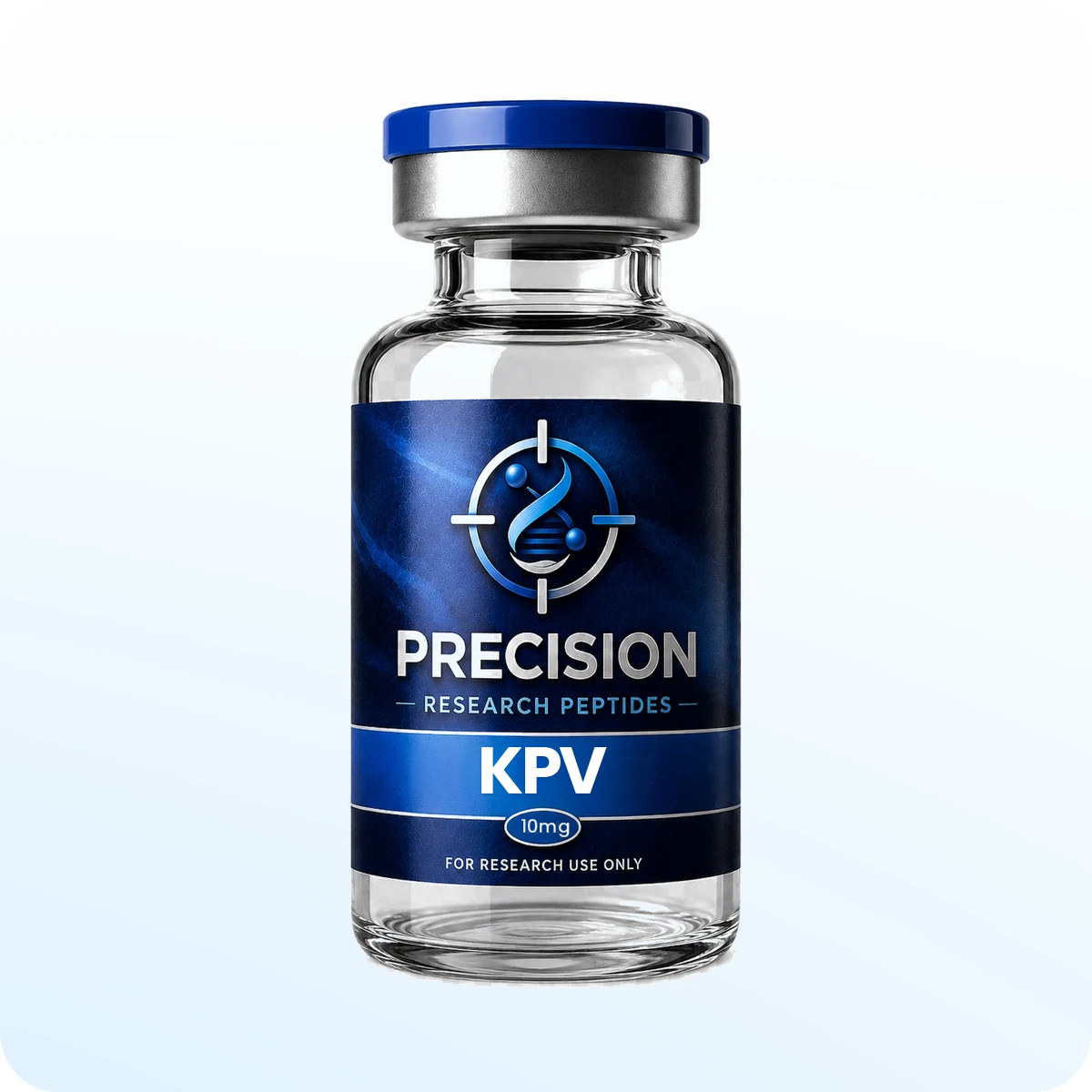
$49.00 Original price was: $49.00.$41.65Current price is: $41.65.
Synthetic tripeptide supplied for biochemical, cellular signaling, and inflammatory pathway research models.
All major credit cards accepted

KPV (Lys-Pro-Val) is a synthetic tripeptide composed of the amino acids lysine–proline–valine. It corresponds to a short peptide sequence associated with α-melanocyte-stimulating hormone (α-MSH), and its compact three-residue structure makes it a defined, reproducible reagent for laboratory research. In research settings, KPV is studied primarily in the context of inflammatory signaling, immune-response pathways, and peptide-mediated cellular activity. Material supplied under this listing is characterized for identity and purity and is intended solely as a research reagent for controlled in vitro and preclinical laboratory investigation.
Not for human or animal use. Research laboratory use only.
All compounds referenced are supplied for laboratory and research applications only and are not for human consumption.
KPV (Lys-Pro-Val) is investigated in laboratory research as the C-terminal tripeptide sequence of α-melanocyte-stimulating hormone (α-MSH). Early experimental work identified this short sequence as an important contributor to the anti-inflammatory activity associated with α-MSH, supporting its use as a defined peptide reagent in inflammation and immunomodulation research.¹ Reviews of the melanocortin literature similarly describe KPV as retaining substantial anti-inflammatory activity despite lacking the full α-MSH sequence required for conventional melanocortin-receptor binding, while noting that its precise signaling mechanisms remain incompletely defined.²
In cell-based studies, KPV has been investigated in inflammatory signaling models, including experiments examining TNF-α-stimulated NF-κB activation in human keratinocytes.³ Separate macrophage studies have evaluated KPV and related α-MSH tripeptides in LPS/IFN-γ-stimulated nitric-oxide production, with findings suggesting activity through mechanisms distinct from classical melanocortin-receptor signaling.⁴
KPV has also been studied extensively in experimental intestinal-inflammation models. Research using intestinal epithelial and immune cells identified KPV uptake through the peptide transporter PepT1 and examined downstream NF-κB signaling, cytokine expression, and inflammatory responses; the same study evaluated KPV in DSS- and TNBS-induced mouse colitis models.⁵ Subsequent preclinical research has investigated KPV using colon-targeted delivery systems and additional animal models of intestinal inflammation.⁶
Across this body of work, KPV is examined primarily in the context of inflammatory signaling, immune-response modulation, epithelial biology, and peptide-transport mechanisms rather than any established physiological or clinical endpoint. Much of the evidence remains derived from cell culture and animal models, and the molecular mechanisms attributed to KPV are not fully resolved. Collectively, the peer-reviewed literature positions KPV as an experimental research reagent for investigating α-MSH-associated signaling and inflammatory pathways under controlled laboratory conditions.
Not for human or animal use. Research laboratory use only.
A professional platform for accessing research compounds with clarity, consistency, and research-first standards.
From sourcing to fulfillment, every step of our process is structured around clarity, consistency, and professional research standards.
Our platform is built to support efficient research workflows with organized categories, standardized product presentation, and simple reordering.
Every product is presented in formats designed for stability, professional handling, and alignment with laboratory environments.

4.8 Stars



Our approach prioritizes clarity, structure, and transparency. Each compound is presented with research-focused documentation, neutral communication, and consistent labeling to support scientific workflows.
We believe long-term trust is built through precision, not promotion.